
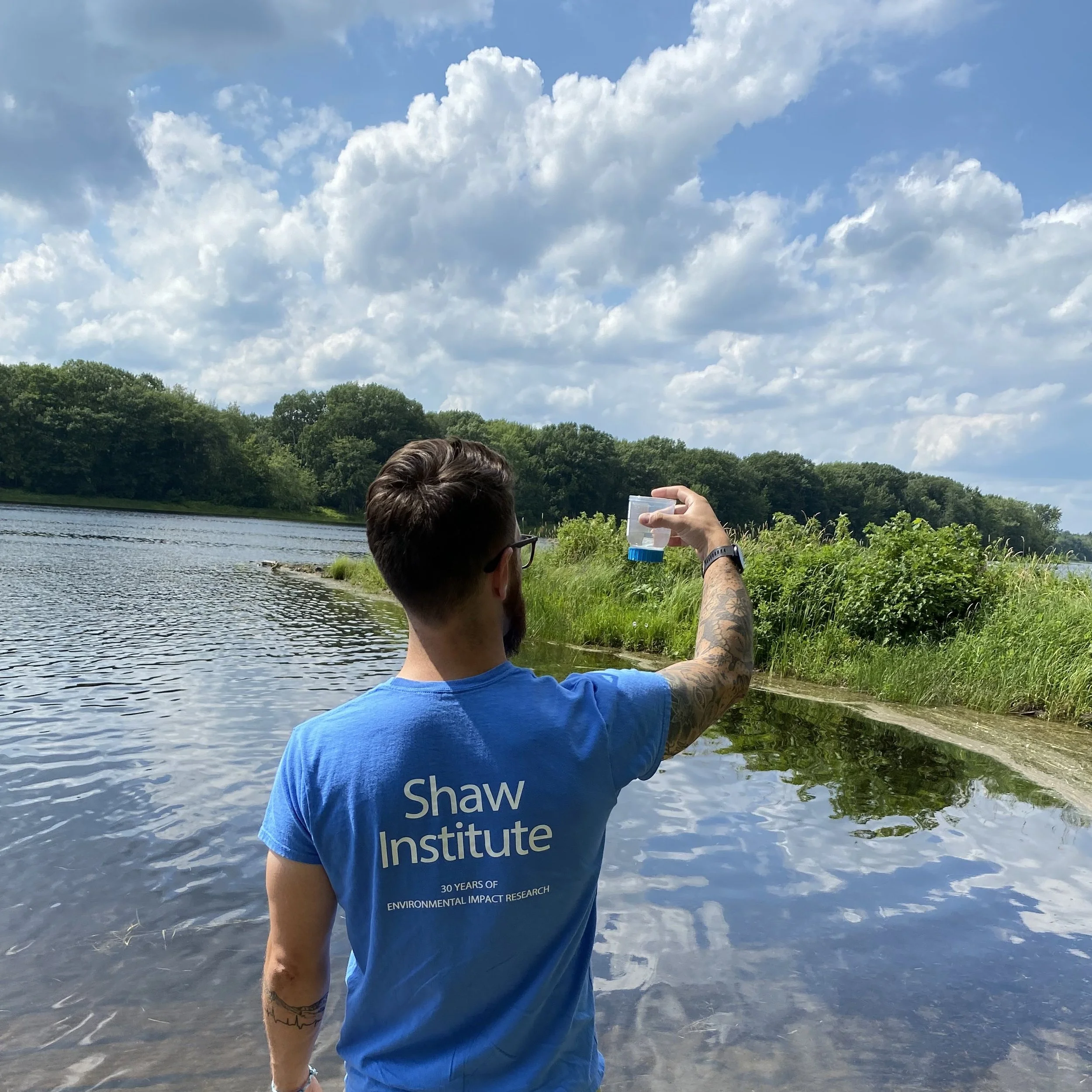
Explore the complexities of our relationship with plastic in an engaging discussion led by plastic pollution expert, Dr. Charlie Rolsky of the Shaw Institute. He will cut through the confusion, separating the facts from the fiction surrounding the widespread use of this material. Dr. Rolsky will address critical issues, including the threats posed by microplastic pollution to environmental and human health, and the deceptive practices of "greenwashing." Join us for insights that offer hope for a more sustainable future.
This presentation is free of charge with donations encouraged. No registration is needed to attend in person. Those interested in attending virtually can register with the button below.
The Shaw Institute is a nonprofit, 501(c)(3), scientific research organization based in Blue Hill, Maine. Founded in 1990 by ecotoxicologist Dr. Susan Shaw, for more than three decades, our research on plastics, ocean pollution, marine mammal health, toxic chemicals, and climate change has informed public opinion and fueled policy, impacting millions of people in the U.S. and worldwide.
In carrying on the legacy of Dr. Shaw, the Shaw Institute focuses on researching and better understanding the connection between environmental and human health. Our scientific research revolves around assessing levels of environmental contaminants, performing coastal water quality monitoring, understanding the effects of climate change, and ultimately, better understanding human impacts on the planet. This important work is done in tandem with scientists and organizations around the world.
The scientific data we collect and aim to publish are transformed into educational materials that can empower communities of people, from children to lifelong learners, regardless of their scientific knowledge base. Through evidence-based scientific research and engagement with surrounding communities of people, we can create significant change on a global scale.